
Many Singapore businesses celebrate when a keyword reaches page one, then wonder why the phone stays quiet. Traffic is only the first step. Leads appear when the right visitor lands on the right page, trusts what they see and finds an easy way to get in touch. These ten tactics link SEO to the part that matters, the enquiry, and they work for service businesses, clinics, contractors, consultancies and online stores alike.
SEO that produces visitors is a good start. SEO that produces enquiries is a business asset. The difference is intent, trust and a clear next step.
1. Target keywords with buying intent
Not every visitor is a potential customer. Prioritise phrases that signal readiness to act, such as service names combined with Singapore, "near me", pricing, quotation, comparison and "best" terms. Informational content still has a role in building trust and capturing early research, but your most valuable pages should match transactional and commercial intent. Review Search Console to see which queries already bring qualified visitors and expand around them. A smaller number of high-intent visits often creates more enquiries than a large number of casual readers who were never going to buy.
2. Build dedicated service pages
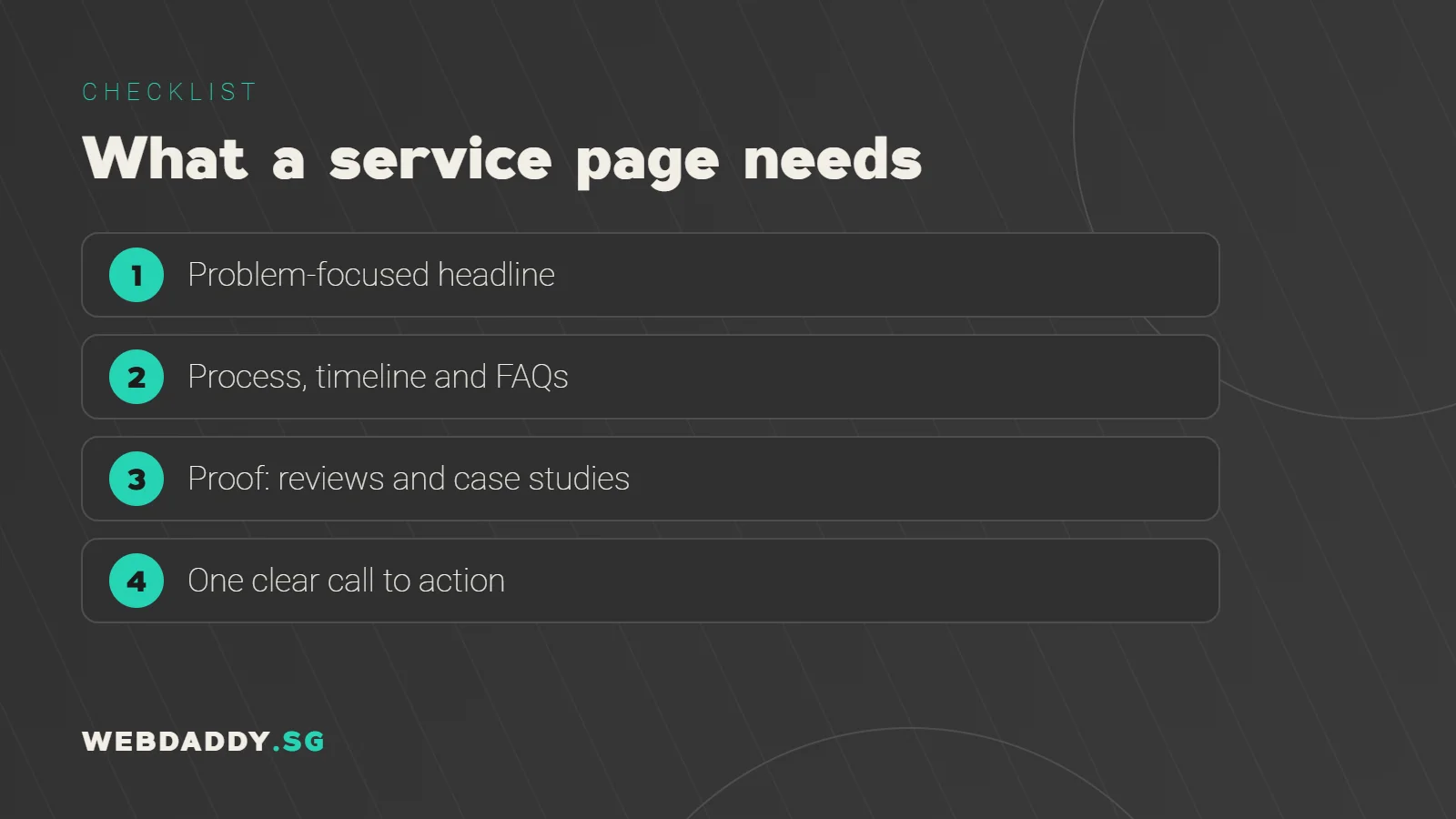
A single page listing every service rarely ranks or converts well. Create a dedicated page for each core service, written around the problem it solves, the process, the typical timeline, FAQs and proof of results. Include clear headings, relevant images and a prominent call to action. Dedicated pages let you target specific keywords and give visitors the exact information they need without hunting. They also make internal linking easier, because blog posts can point to the most relevant page for the next step.
3. Win local search with Google Business Profile
For many Singapore service businesses, the map pack is the shortest route to a call. Claim and complete your Google Business Profile with accurate categories, services, opening hours, photos and a short description. Add posts and respond to every review. Keep your name, address and phone number consistent across directories and your website. Encourage satisfied customers to leave detailed reviews naturally, never by offering inappropriate incentives. Local listings that look active and trustworthy persuade people to call before they even visit your site.
4. Make your calls to action obvious
Visitors will not search for a contact page if the next step is unclear. Place a clear button above the fold and repeat it after key sections. Use action-focused text such as "Get a free quote" or "WhatsApp us now" instead of vague words like "Submit". Keep colour contrast strong, make buttons large enough to tap on a phone and ensure they match the page's purpose. Each page should have one primary action, with secondary options supporting it rather than competing for attention.
5. Offer the contact methods Singaporeans prefer
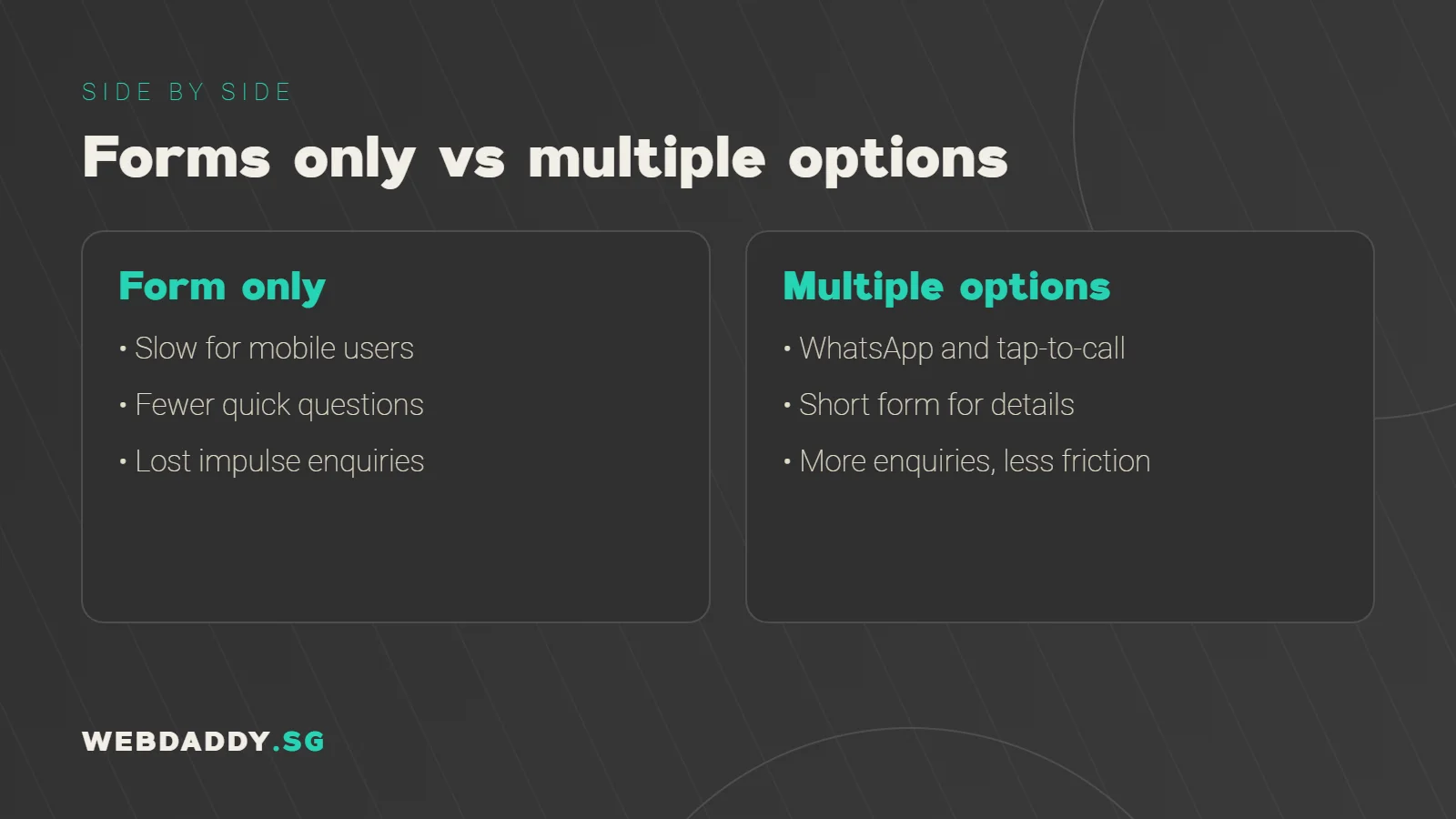
Singapore customers often favour quick messaging over lengthy forms. Offer WhatsApp, tap-to-call and a short form side by side. Pre-fill WhatsApp messages with the page topic so your team knows what the enquiry is about. Display opening hours and expected response times. Make sure someone monitors every channel and replies promptly, because speed of response strongly influences who wins the job. Multiple options remove friction and let each visitor choose their comfort level.
6. Use social proof where decisions are made
People trust other customers more than they trust your marketing. Place testimonials, review ratings, case studies, client logos and certifications close to your calls to action. Use specific details such as the project type, the problem and the outcome, and include names and photos where permission allows. Avoid fabricated or vague praise, which damages credibility. If you have achievements, years of experience or accreditations, show them clearly. Evidence reduces perceived risk, and reduced risk increases enquiries.
7. Create content that answers sales questions
Your sales team already knows the questions prospects ask before they buy: price, timeline, process, comparisons and risks. Turn those into helpful articles and FAQs. A page that honestly explains what affects cost, or how to choose between two options, attracts people close to a decision and positions you as an expert. End each article with a relevant next step, such as a consultation, checklist download or quote request. This approach pulls prospects through your site naturally instead of relying on a single homepage pitch.
8. Build forms that people finish
Long forms kill conversions. Ask for only what you need, such as name, phone or email and a short message, and explain what happens next. Use clear labels, mobile-friendly fields and inline error messages. Add a short consent note aligned with the PDPA and a link to your privacy policy. Test the form regularly to make sure it actually sends notifications to a monitored inbox. Thank-you pages are useful for tracking conversions and for reassuring visitors that you received their request.
9. Speed up your pages and fix the mobile journey
A visitor who waits too long will leave before reading your offer. Compress images, limit heavy scripts, and ensure pages load quickly on mobile data. Check that menus, buttons and forms work properly on small screens and that nothing covers important content. Review Core Web Vitals in Search Console and fix the slowest templates first. Technical polish may not feel like marketing, but it directly affects how many visitors reach your enquiry button.
10. Track leads, not just traffic
Set up Google Analytics and Search Console so you can see which pages and keywords produce enquiries. Track form submissions, WhatsApp clicks, phone taps and Google Business Profile calls as conversions. Ask every new customer how they found you and record the answer. Review the data monthly: double down on pages that convert, improve pages with high traffic and low enquiries, and retire content that attracts the wrong audience. Measurement turns SEO from guesswork into a repeatable lead engine.
Follow up quickly and professionally
Even the best SEO fails if enquiries are handled poorly. Respond within the time you promise, ideally within the same business day or faster. Send a clear next step, such as a call booking or a quotation timeline. Keep a simple CRM or spreadsheet to track each lead from enquiry to outcome so none slip through the cracks. Follow up politely if a quote has not received a reply. Good follow-up converts more of the traffic you worked hard to earn.
Be patient but deliberate
SEO leads build over time, and the early months are about foundations: fixing technical issues, improving key pages and publishing helpful content. Review progress against realistic milestones, such as better indexing, rising impressions, improved click-through rates and then growing enquiries. If results stall, revisit your keyword choices, page quality and calls to action. Consistent improvement beats occasional bursts of activity, and a steady flow of qualified leads is worth far more than a temporary ranking spike.
Generate more leads with Webdaddy
Webdaddy connects SEO to what matters: enquiries and customers. Our team combines SEO services with conversion-focused website design and Google Ads so you capture demand from every direction. Message us on WhatsApp at +65 8083 8785, email support@webdaddy.sg, or book a free consultation and we will show you where your site is losing leads.
Call +65 8083 8785Email support@webdaddy.sg
Frequently asked questions
How long does SEO take to produce leads?
Some local and technical improvements can help within weeks, but competitive keywords usually take months. Consistency and conversion-focused pages speed up results.
Is SEO better than Google Ads for leads?
They serve different purposes. Ads bring immediate traffic while SEO builds long-term visibility. Many businesses use both together.
What should I track to measure SEO leads?
Track form submissions, WhatsApp clicks, phone calls, Google Business Profile actions and the pages and keywords that lead to them.
Can Webdaddy improve my website's conversion rate?
Yes. We review your pages, calls to action and forms, then make practical changes that help more visitors get in touch.